
What’s the point of a 404 page?
To keep people from rage-quitting your site when something goes wrong.
Unfortunately, most brands treat their 404 page like an afterthought. But done right? A 404 can be an Easter egg, a conversion opportunity, a brand voice flex, or a tiny moment of joy that makes someone want to stick around.
I rounded up 20 real-life examples (from brilliant to broken) and sorted them into categories so you can get inspo based on the vibe you’re going for.
And yes, I show some massive fails from HUGE brands that will have you wondering if these companies have outsourced their entire marketing team to robots.
If you’ve ever wondered whether your 404 page is helping or hurting your site, this is your guide.
Let’s break it down.
But first… let’s get on the same page (haha, a pun!) by defining what a 404 page is.
A 404 page is what your visitors see when they try to access a page on your site that doesn’t exist. It could be because the link was broken, mistyped, or the page was deleted.
In other words: the Internet equivalent of “uh oh, wrong turn.”
I reviewed 20 real 404 pages and sorted them into categories, from sleek and strategic to straight-up chaotic.
On-Brand and Playful
These pages match the brand’s guidelines while surprising and delighting visitors who land here by accident.
Spotify
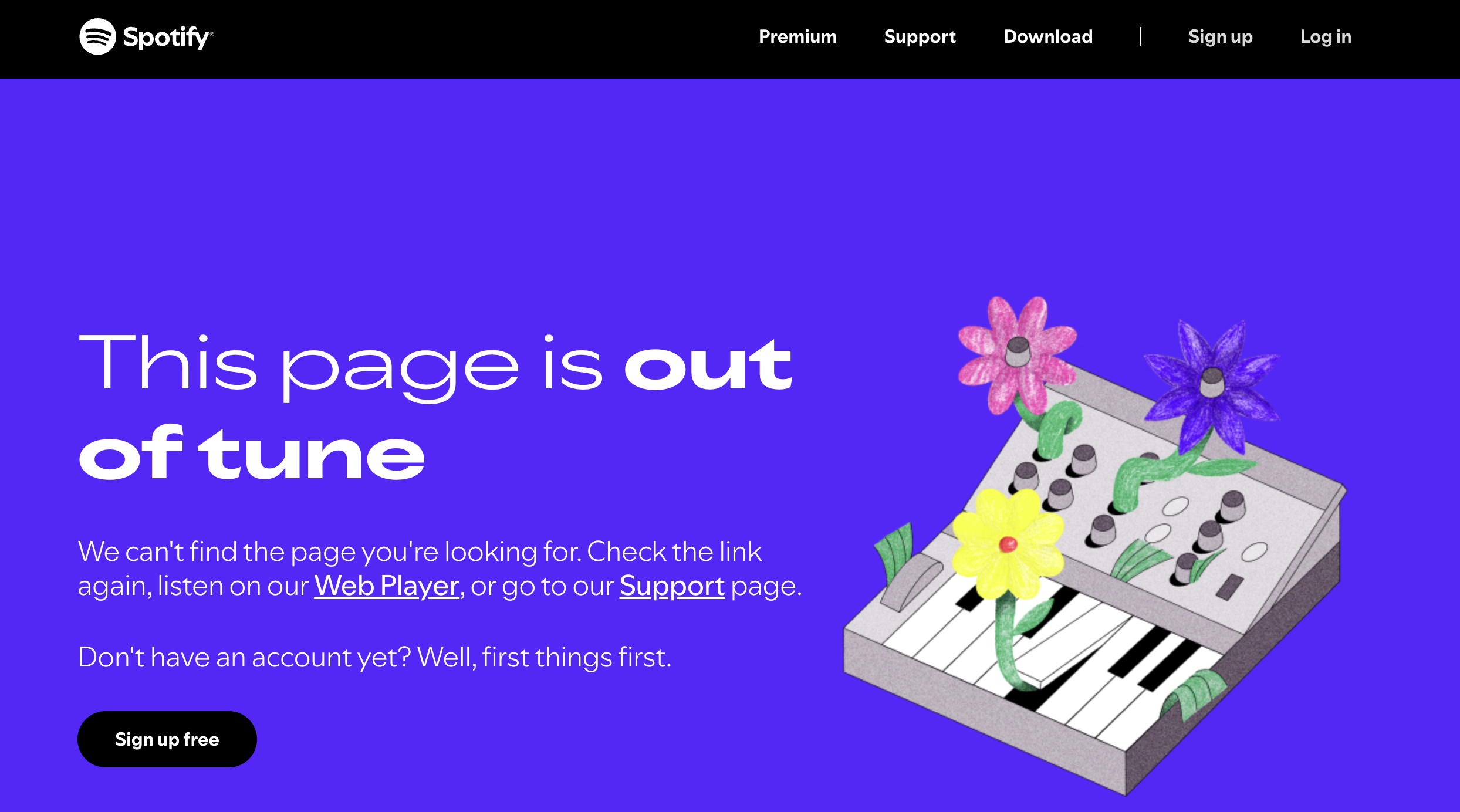
"This page is out of tune” hits the right note... no pun spared.
With their signature purple background, whimsical illustration, and clear navigation links, this page feels unmistakably Spotify. Musical, playful, and still functional.
Patagonia
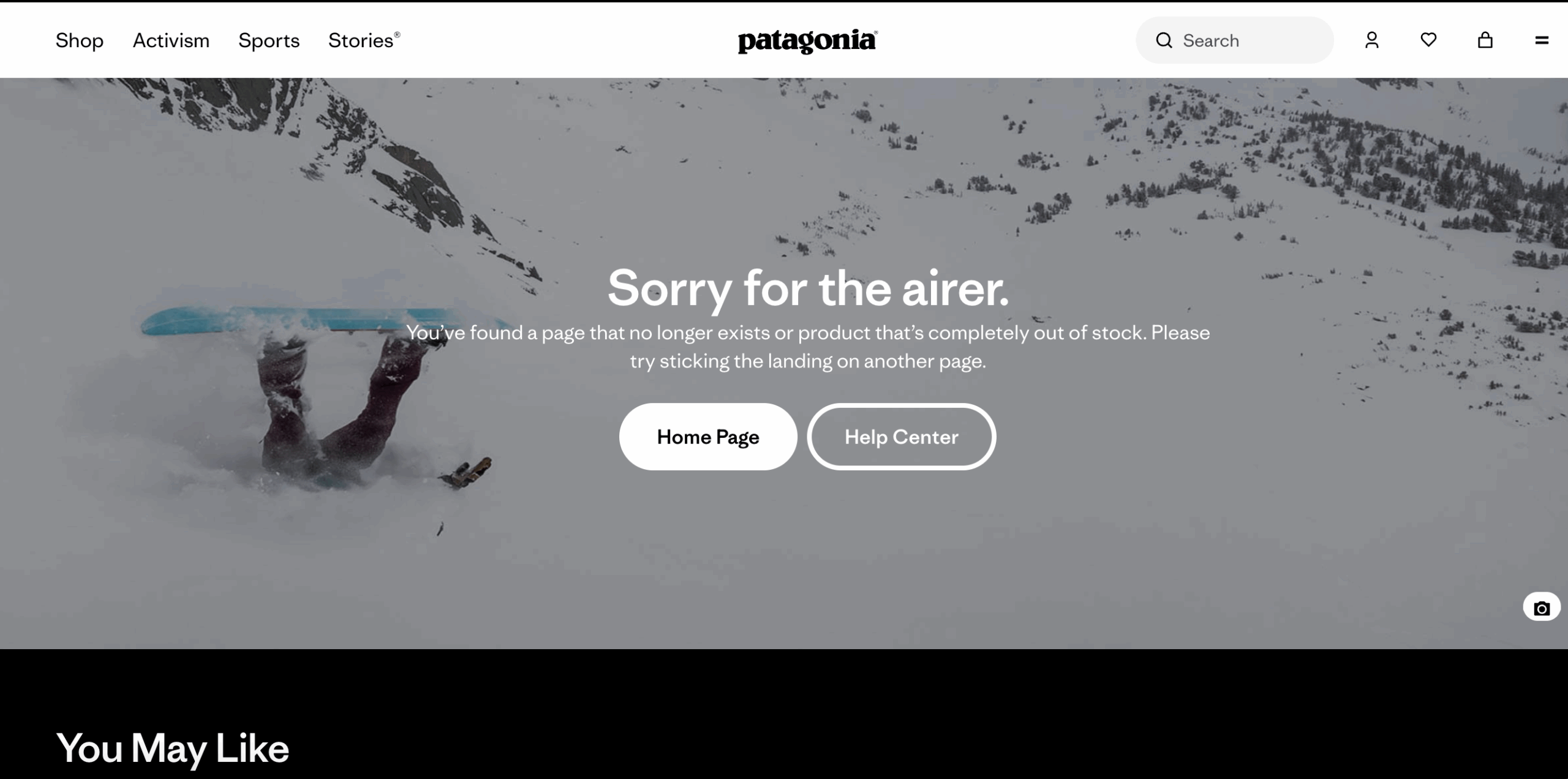
“Sorry for the airer.” It’s a dad-joke-level pun paired with a full-screen image of a snowboarder mid-crash (the visual equivalent of wiping out online).
Totally on-brand for a rugged outdoor company with a sense of humor.
Netflix
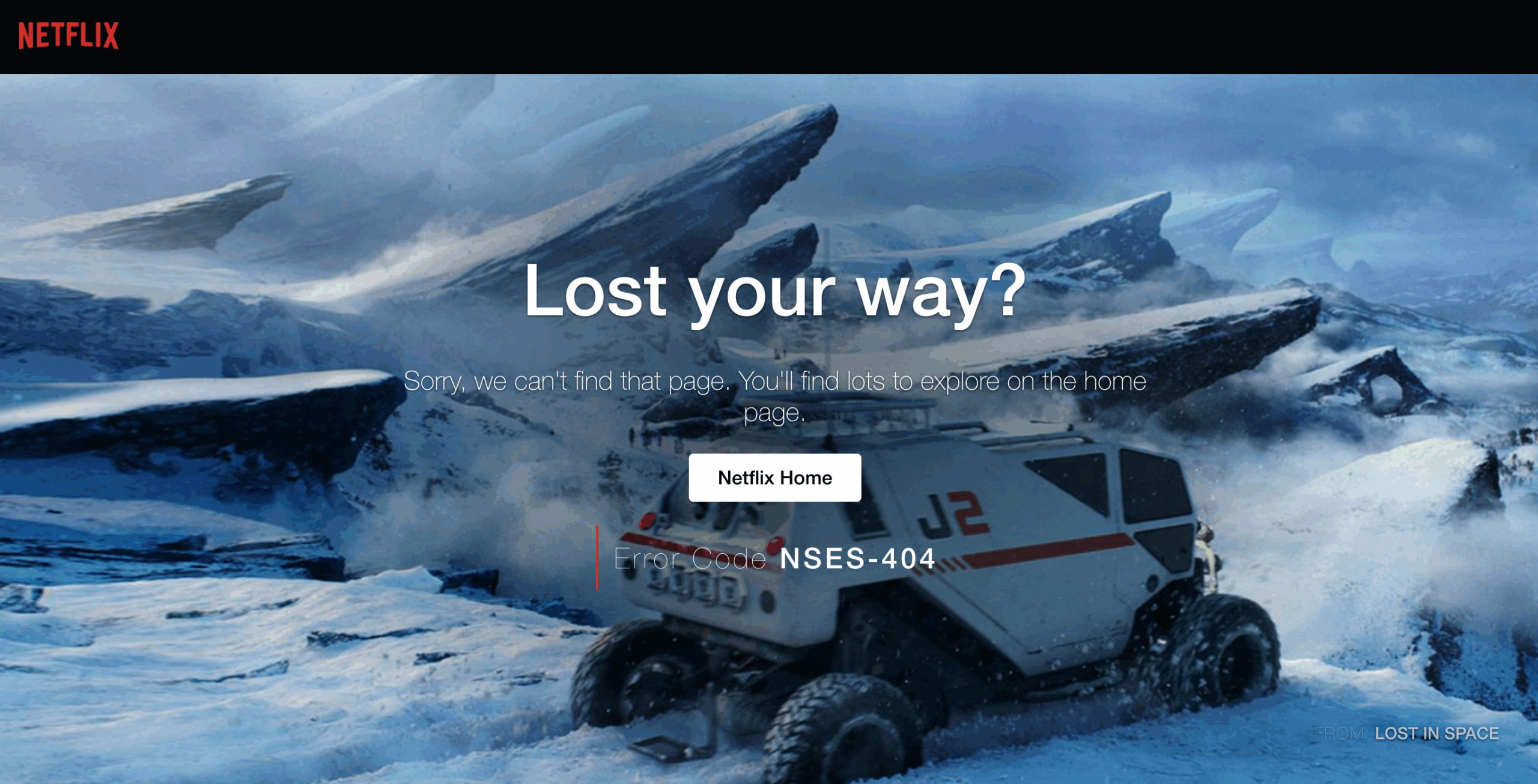
"Lost your way?" overlays a cinematic still from Lost in Space, giving the page a branded, immersive feel. The tone is gentle, and the CTA is clear, all while reinforcing Netflix’s identity as an entertainment-first platform.
Pixar
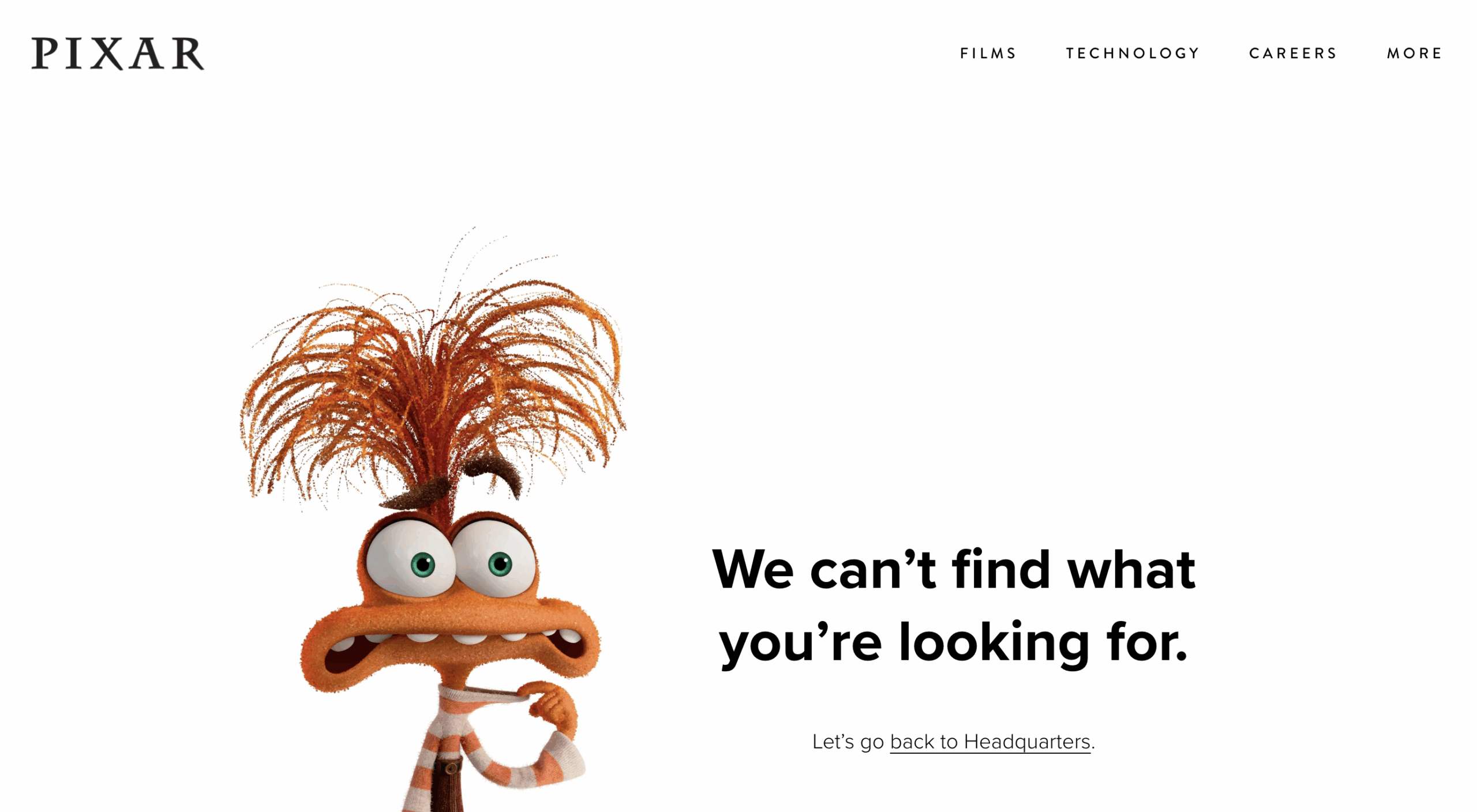
No overthinking here. Pixar drops a quirky side character (Fear from Inside Out) front and center with minimal text. It’s visually light, perfectly in character, and doesn’t try too hard, which is exactly why it works.
On The Button
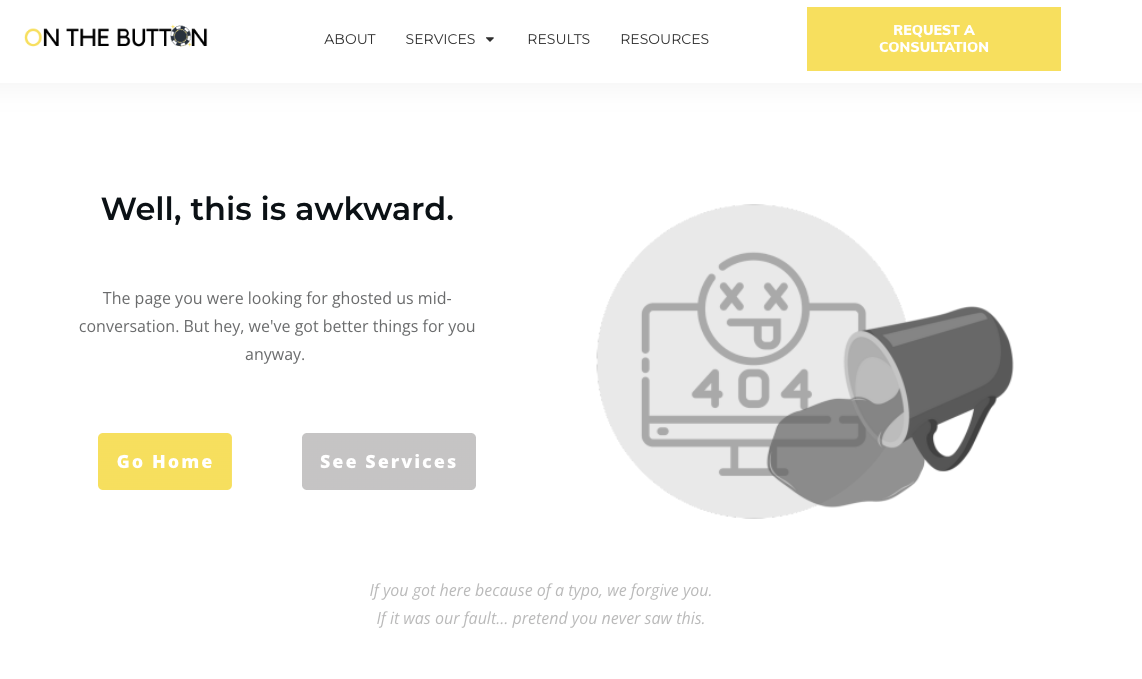
Okay, yes, this one’s mine, but it earns its spot. A cheeky “Well, this is awkward” headline, a ghosting metaphor, and call-to-action buttons that keep visitors moving. It’s simple, it’s sassy, and it still does its job. (Forgive the shameless inclusion.)
When brands get their 404 page this right, you almost wish you’d clicked a broken link on purpose.
But of course, not every company hits that sweet spot. Some skip the branding entirely and focus on pure function. And that can be just as good.
Helpful AF
They might not be flashy, but they guide you back on track with clear navigation and relevant CTAs (calls to action). It's like having access to a digital concierge.
Airbnb
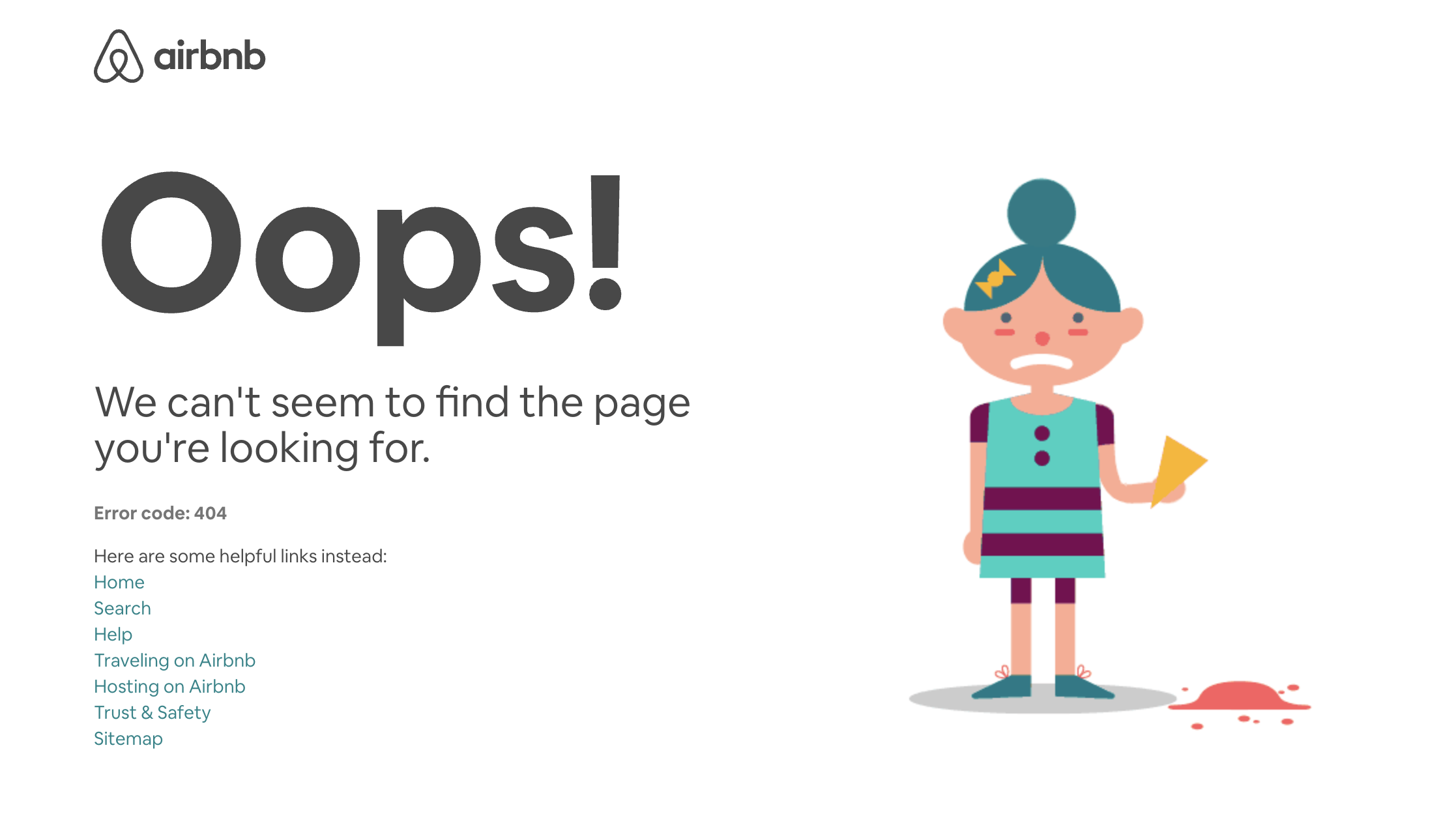
Airbnb keeps it simple and human. The search bar is front and center, giving you a direct route to find what you were looking for. The layout is clean, the tone is calm, and it quietly reinforces their brand promise: we’ll help you find your way home.
Easyplant
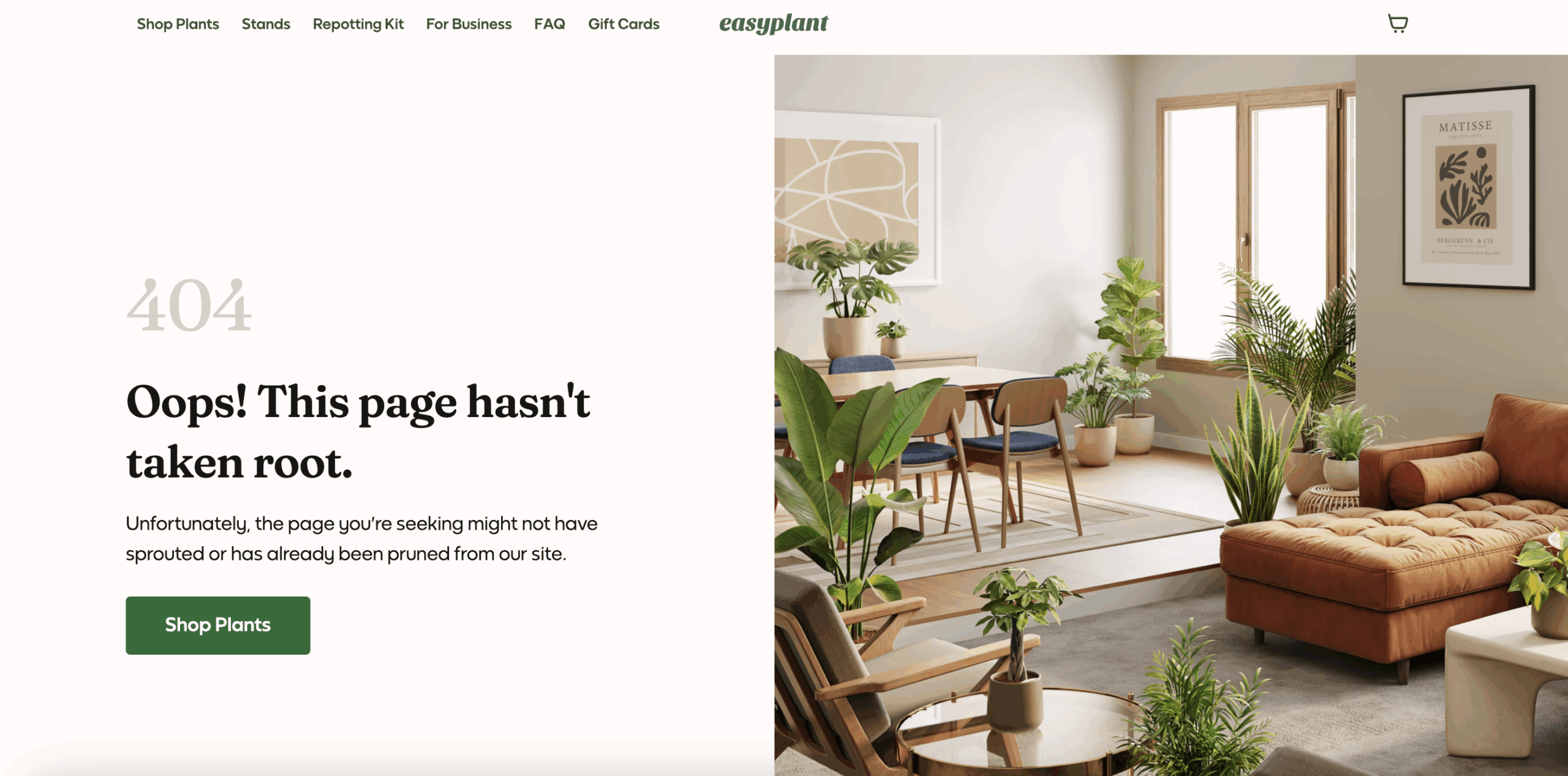
“Oops! This page hasn’t taken root.” It’s a gentle, on-theme nod to their product, paired with a prominent “Shop Plants” button. You’re never stuck wondering what to do... the path forward is literally green.
Allbirds
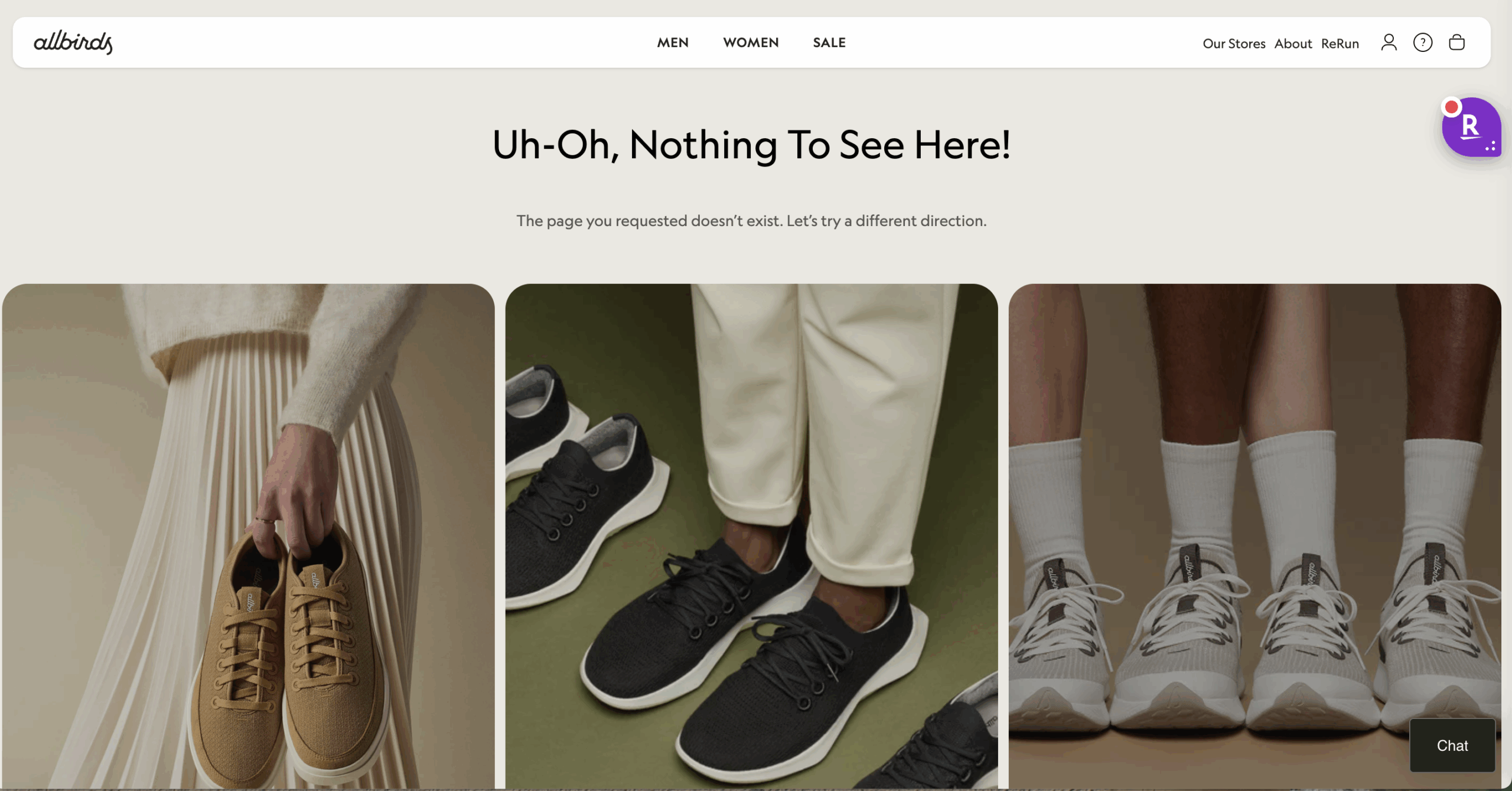
Three gorgeous product images pull you back into browsing mode instantly. The “Uh-Oh, Nothing to See Here!” headline keeps it light, but the real win is how quickly you can jump right back into shopping.
Chipotle
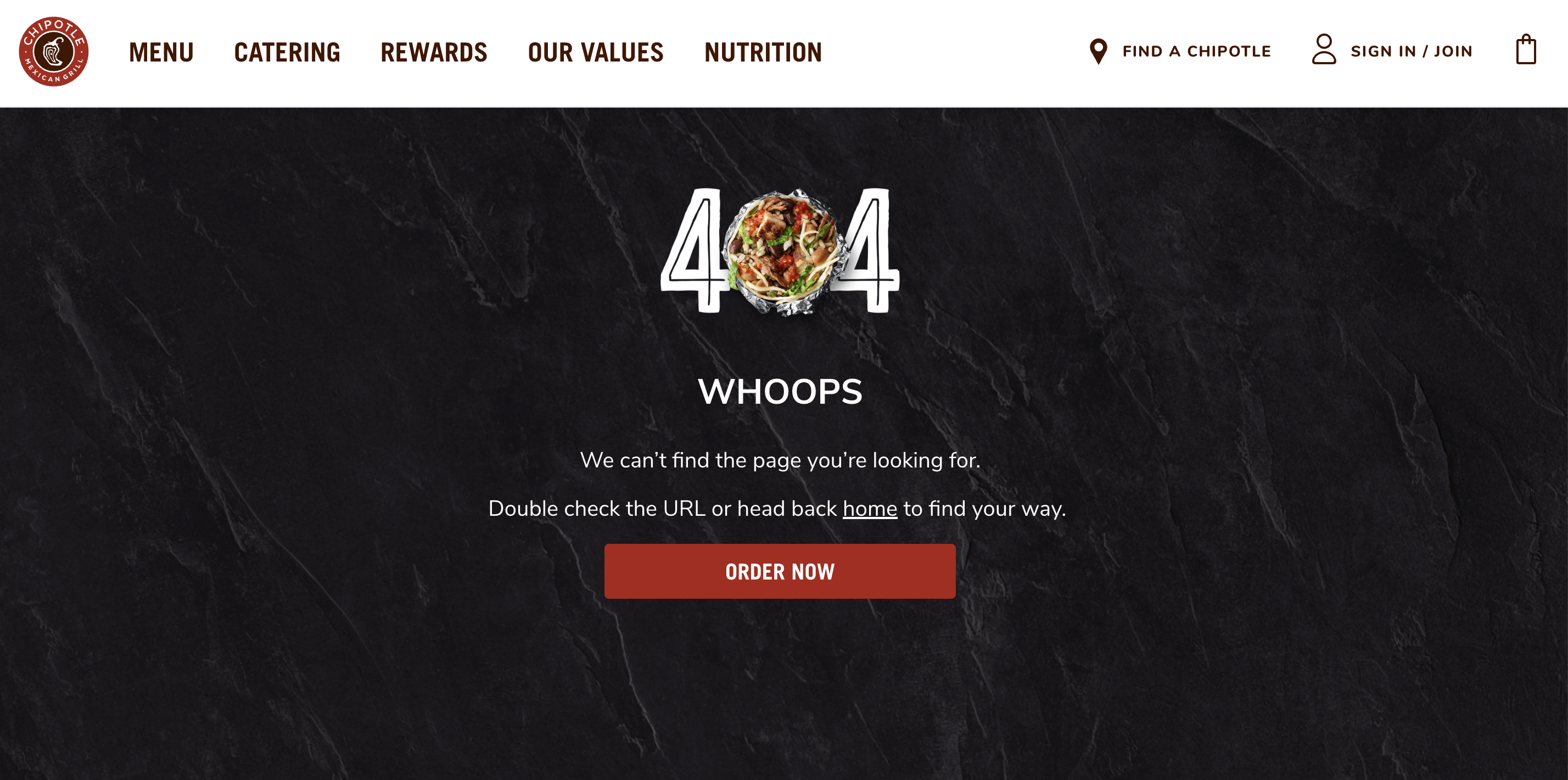
A foil-wrapped burrito as the “0” in 404? Iconic. And it makes me hungry.
But beyond the visual, the bright red “Order Now” button is the real workhorse here. One click and you’re back to fulfilling your guac-related destiny.
HubSpot
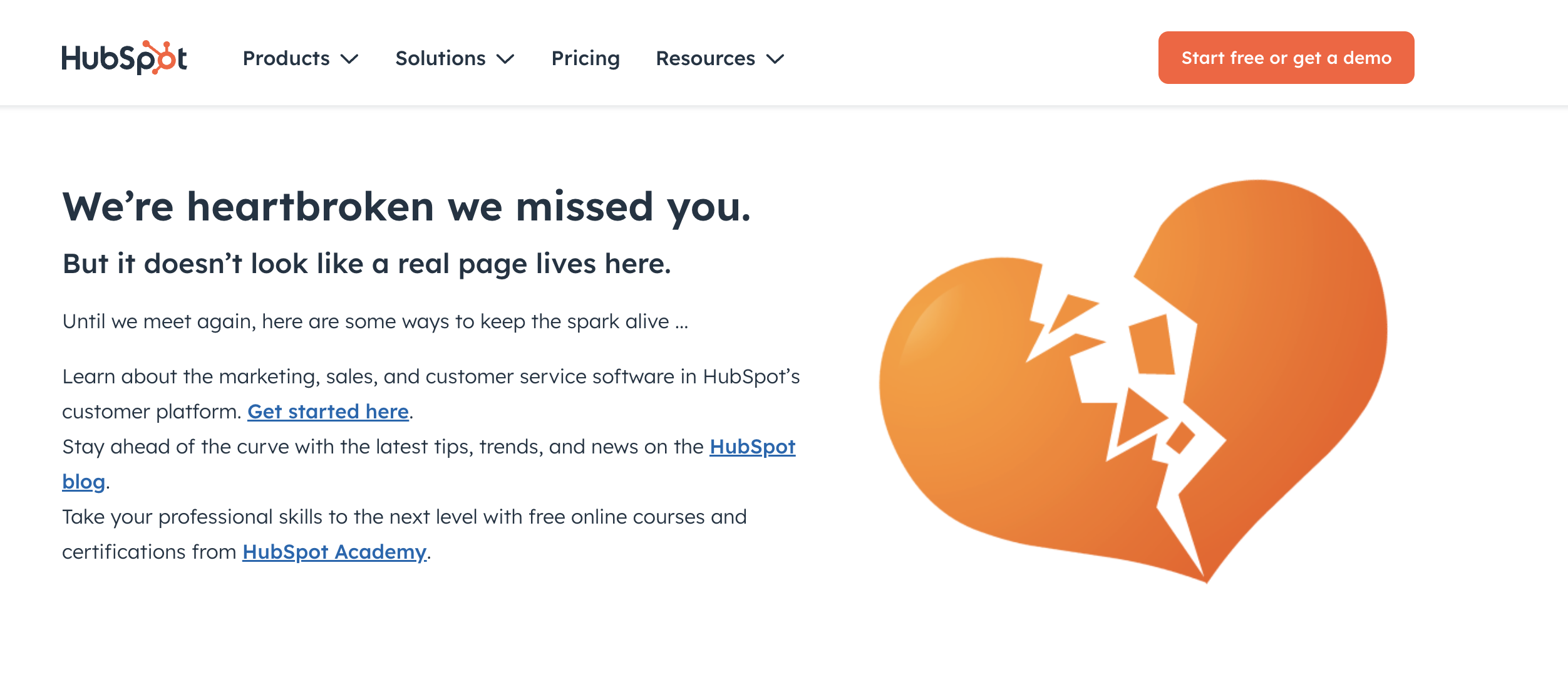
Is there any "best of" list these guys aren't on?! Instead of just sending you away, HubSpot hands you a menu of valuable next steps: product links, blog posts, and free courses.
The big broken-heart graphic makes it emotional, but the CTAs make it functional.
When a 404 page is this helpful, you barely notice you’ve hit a dead end. It's more like a well-placed detour sign. But not every brand takes the polite, let-us-help-you route. Some prefer to lean all the way into chaos, sarcasm, and internet humor.
Hilarious and Irreverent
These go for laughs, memes, and Internet chaos. These brands don't take themselves too seriously, and I love that level of confidence.
Dollar Shave Club
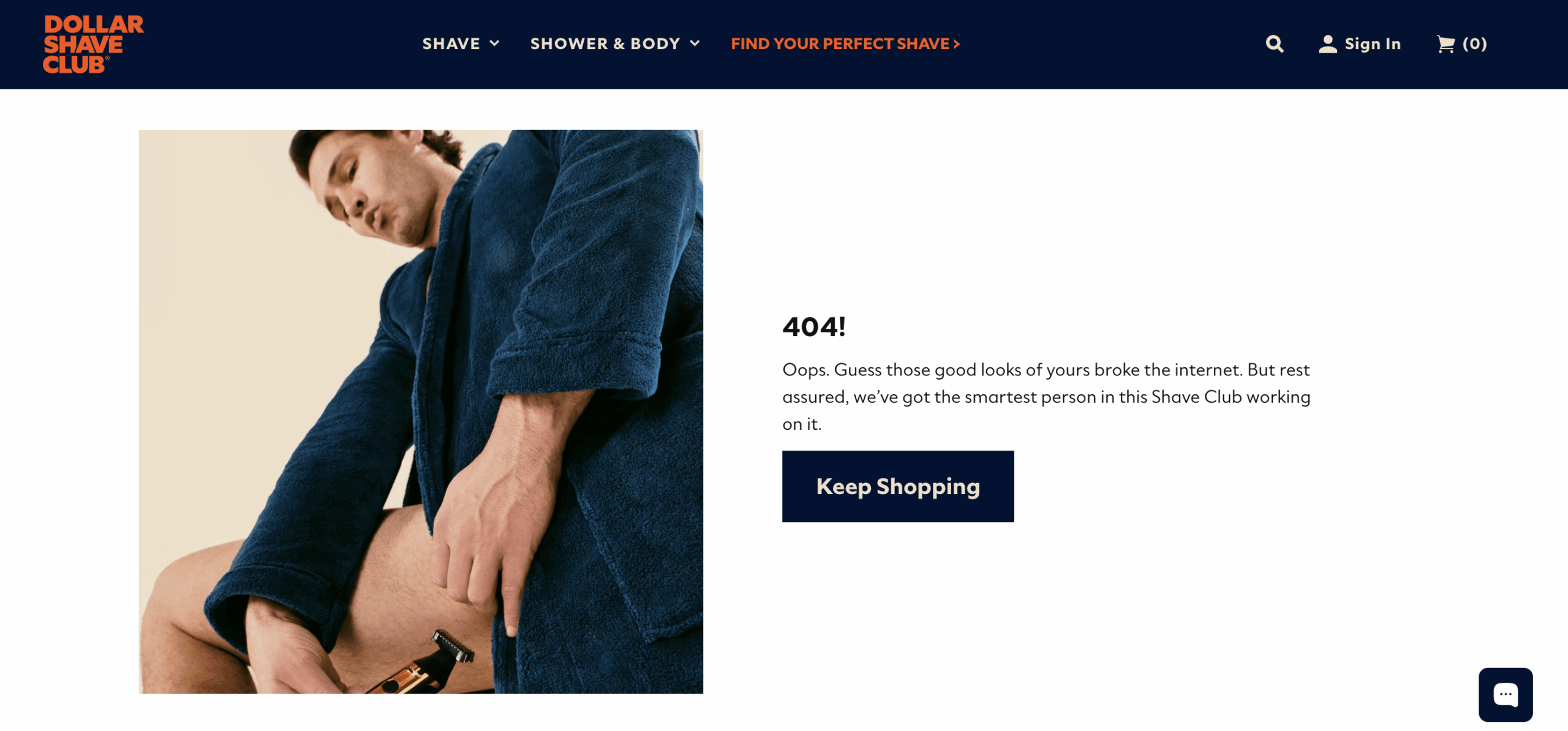
“Oops. Guess those good looks of yours broke the internet.” It’s over-the-top flattery, paired with a confident promise that “the smartest person in this Shave Club” is on it. The accompanying image, a man in a robe mid-manscaping, adds to the irreverent, just-the-right-amount-of-absurd vibe.
LEGO
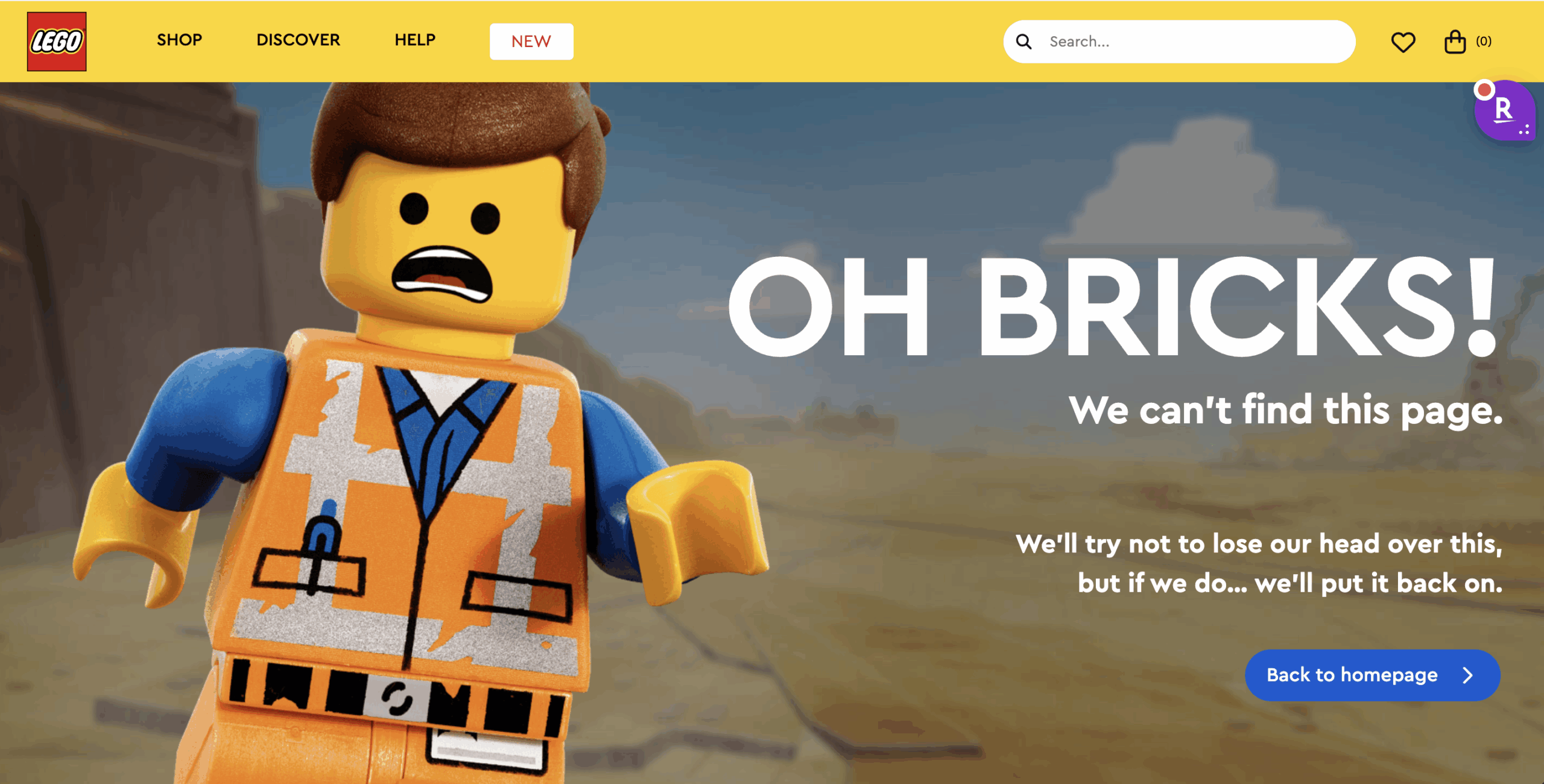
“Oh Bricks!” sets the tone instantly. It’s the kind of pun that makes you groan and grin at the same time. The follow-up (“We’ll try not to lose our head over this, but if we do… we’ll put it back on.”) is perfectly on-brand for a company built on playful, self-aware humor.
When humor works, it’s magic. The brand feels human, approachable, and memorable.
Interactive
Sometimes a 404 page doesn’t have to be particularly funny or helpful. It just has to be entertaining enough to keep you from clicking away. These brands prove that a little personality can turn a dead link into a delightful detour.
Wendy's
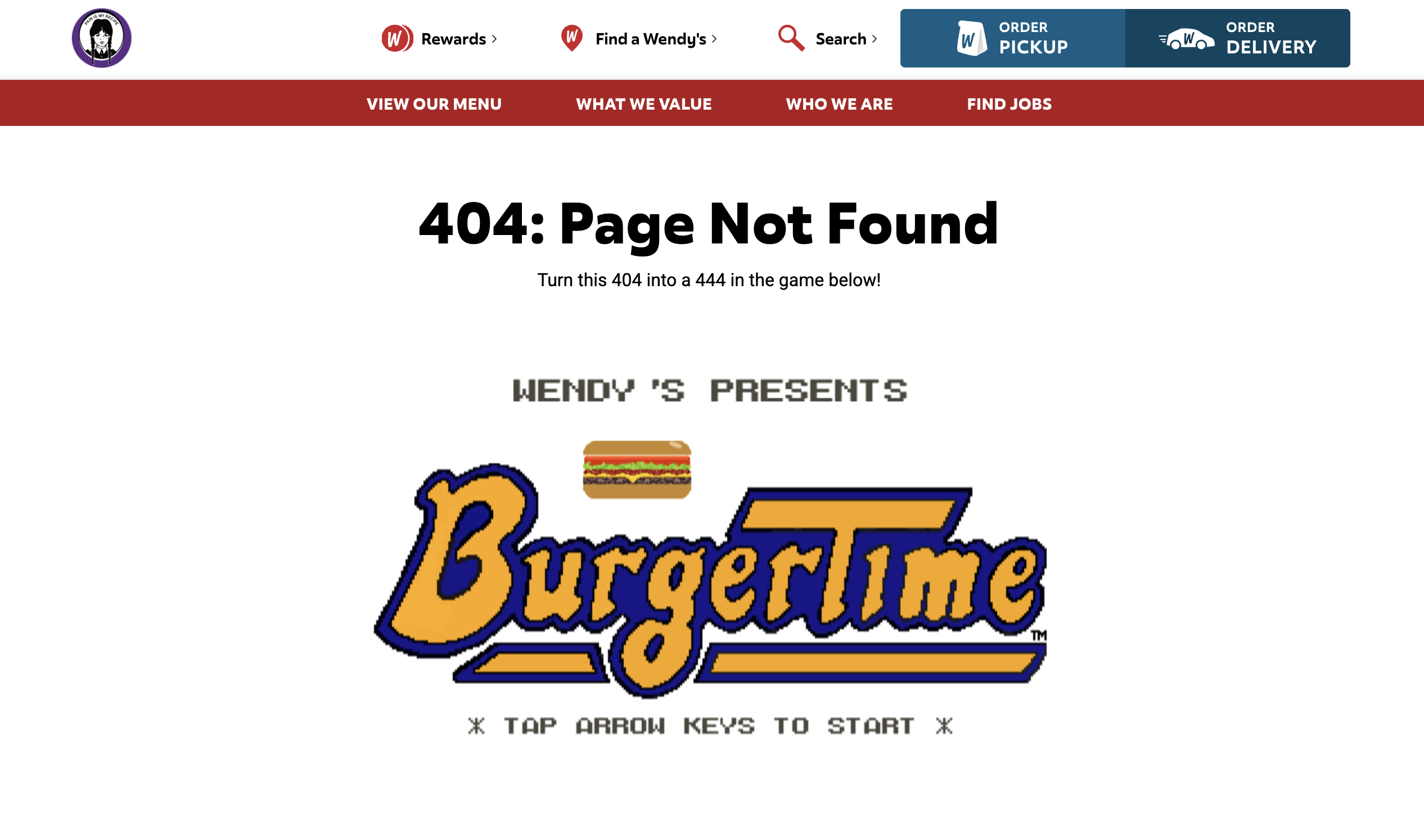
Wendy’s doesn’t just shrug off a broken link, they send you on a mission. Their 404 page hides a full-blown retro-style video game, complete with pixelated Wendy’s fighting enemies to save breakfast (yes, really). It’s part nostalgia trip, part brand flex, and 100% more fun than hitting the back button.
Starbucks
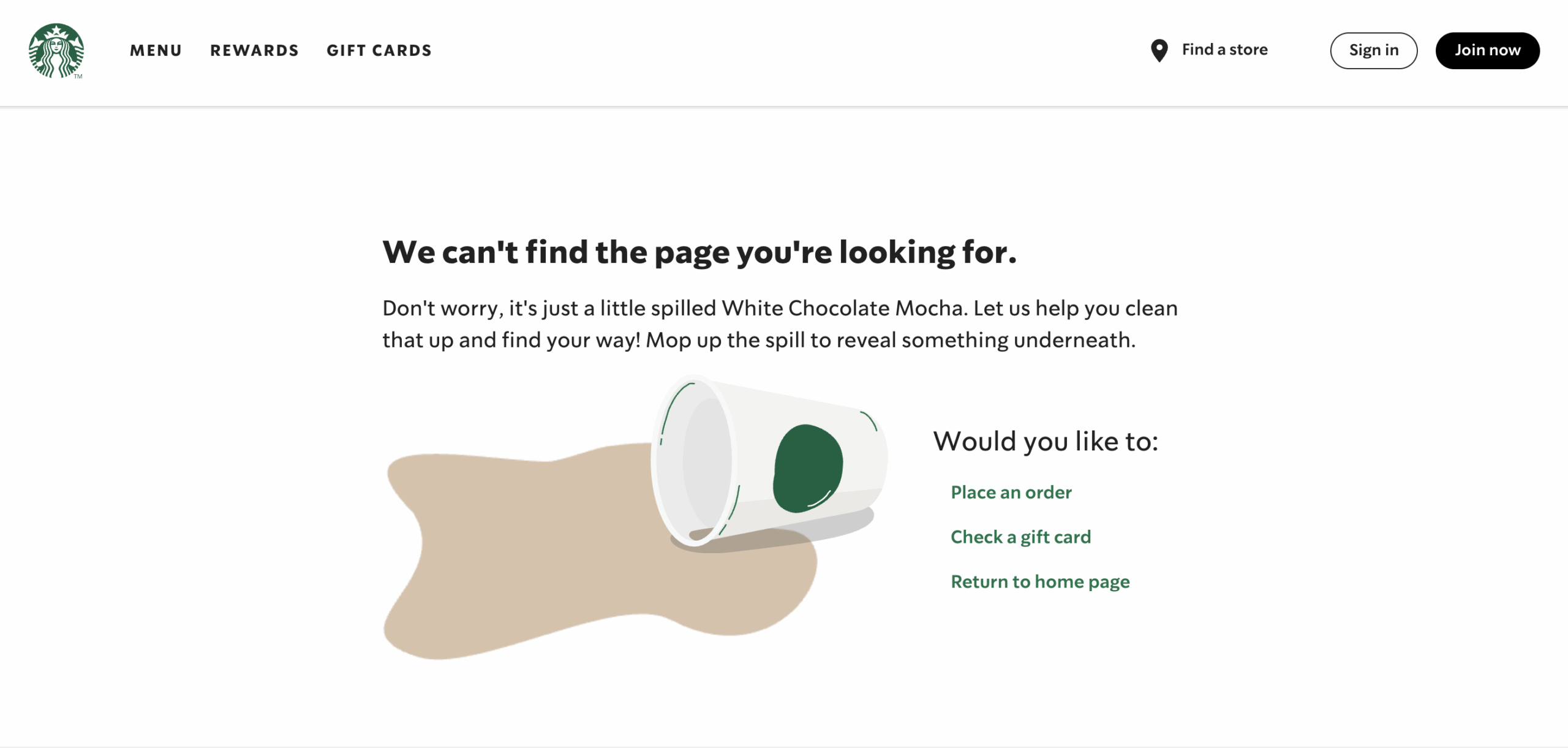
Starbucks turns their 404 into an oddly satisfying micro-moment: you “wipe” away a virtual coffee spill right on the screen. It’s tactile, calming, and perfectly on-brand for a company built on rituals and sensory experiences. Who knew fixing a mistake could feel like cleaning your desk at the end of the day?
Slack
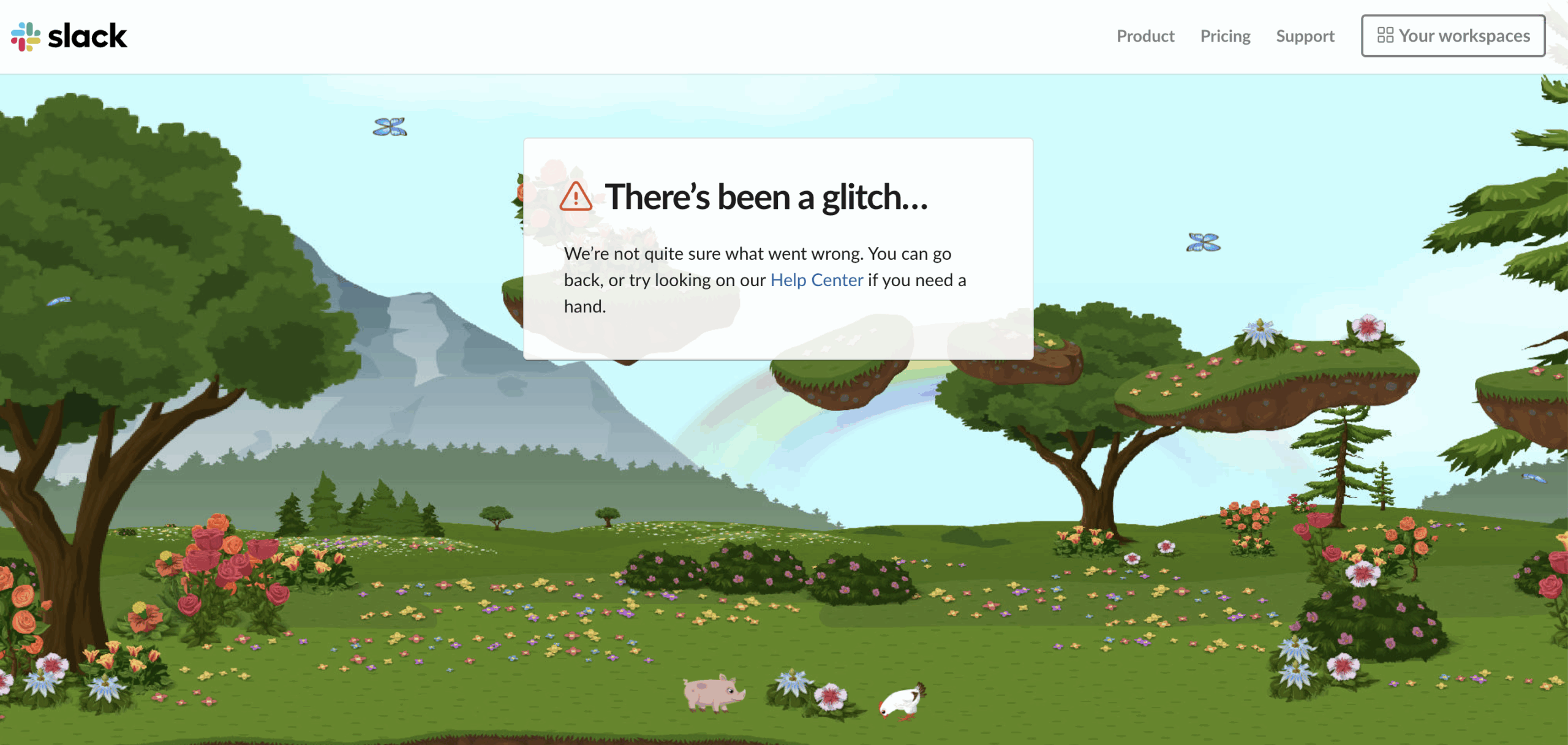
Instead of a plain error message, Slack drops you into a whimsical, side-scrolling animation worthy of a Disney storyboard. You follow a little character wandering through a colorful, looping landscape, complete with hidden visual gags.
This is a coffee-break escape you didn’t know you needed.
But sometimes, a 404 page swings for the fences and… just misses. Not because the page is broken or boring, but because something about the tone, imagery, or execution doesn’t quite connect.
Mixed Signals
Missed puns. Airball jokes. Why tho.
Amazon
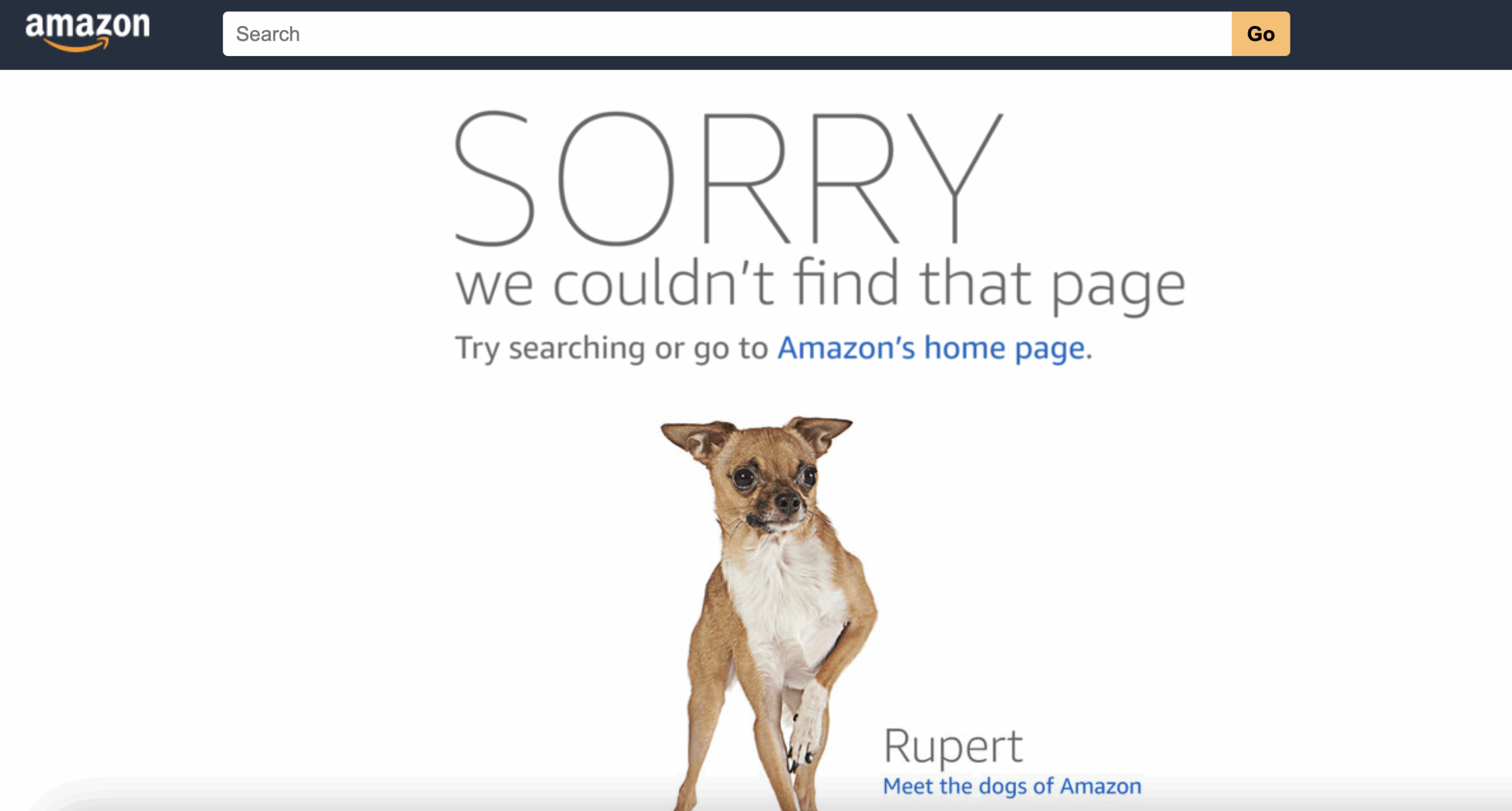
The dog photos are adorable. But for a company that sells literally everything, having a pup front and center without making a “fetch” joke feels like a wasted opportunity. The design is clean, but the missed pun is glaring.
Ben & Jerry's
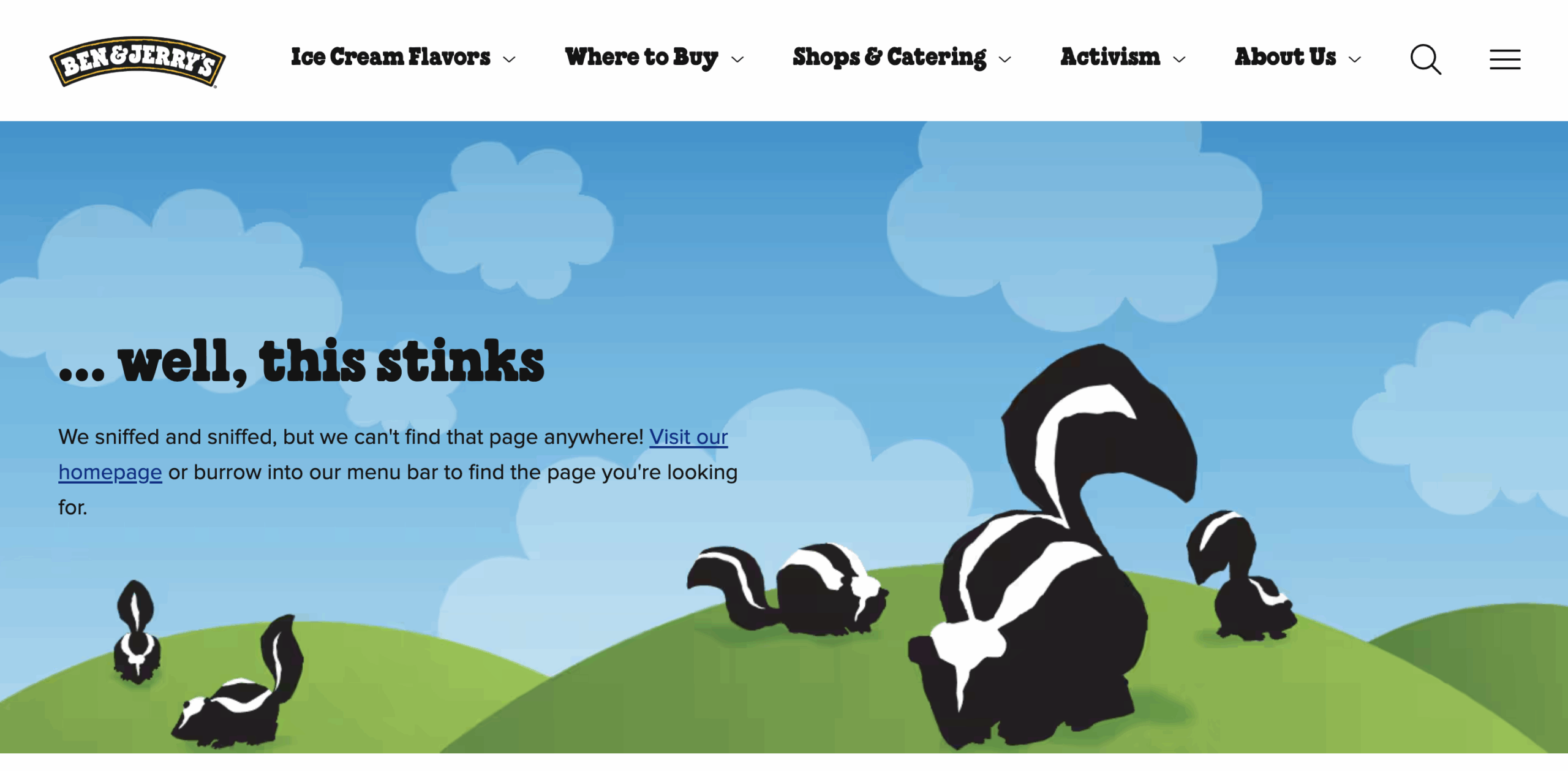
The headline, “… well, this stinks,” paired with a herd of cartoon skunks is definitely attention-grabbing.
The problem? Skunks aren’t exactly appetite-boosters, especially when your whole business is about indulgent frozen treats. A cow cameo would’ve been far more on-brand.
Glossier
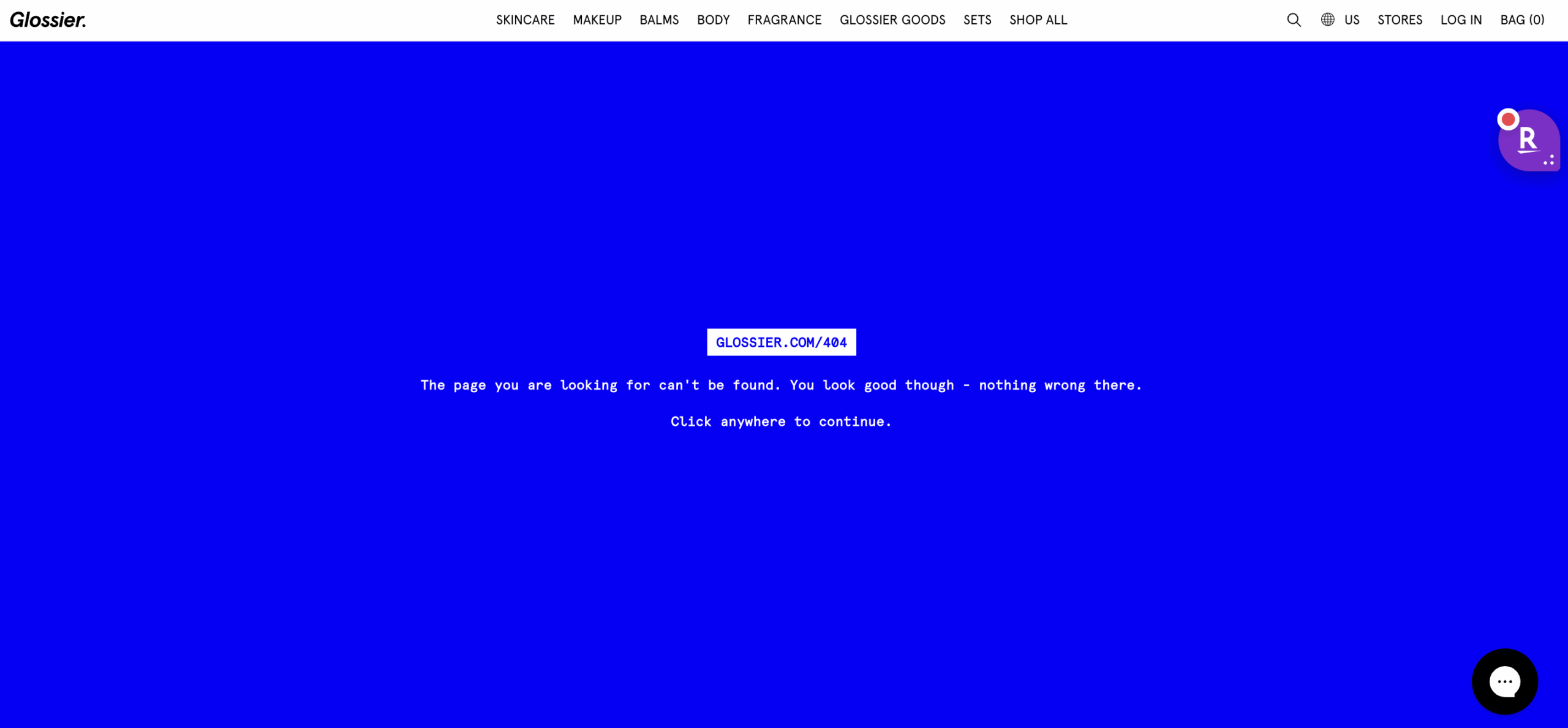
The bright blue “screen of death” is clever, and the copy is flirty (“You look good though... nothing wrong there”). But while devs, Gen X, and elder millennials might appreciate the nod to old-school Windows errors, most Glossier shoppers won’t get the reference.
It’s a cool concept (even though that shade of blue gives me heart palpitations), just not built for their target market.
But for every brand that turns a 404 into a delightful, on-brand moment, there are others that drop the ball so hard you’d think they were trying to injure the user experience.
The Worst of the Worst
Phoned in. Off-brand. Just plain broken. Don't be these.
Apple
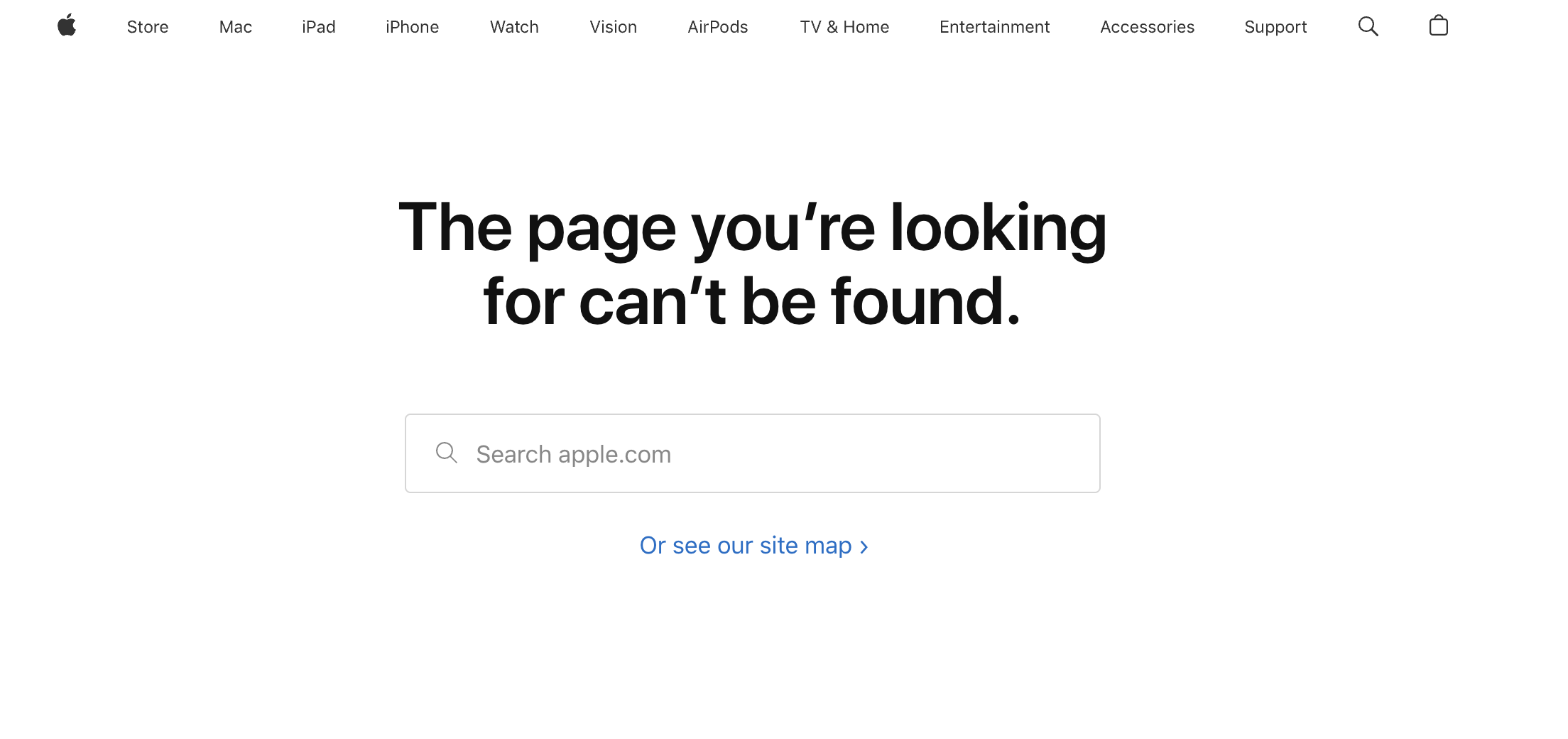
For a company that’s built its empire on seamless, intuitive design, this is shockingly bland. No personality, no visual hook. Just sterile text and a search bar. It’s like they forgot that design is the experience.
Canva
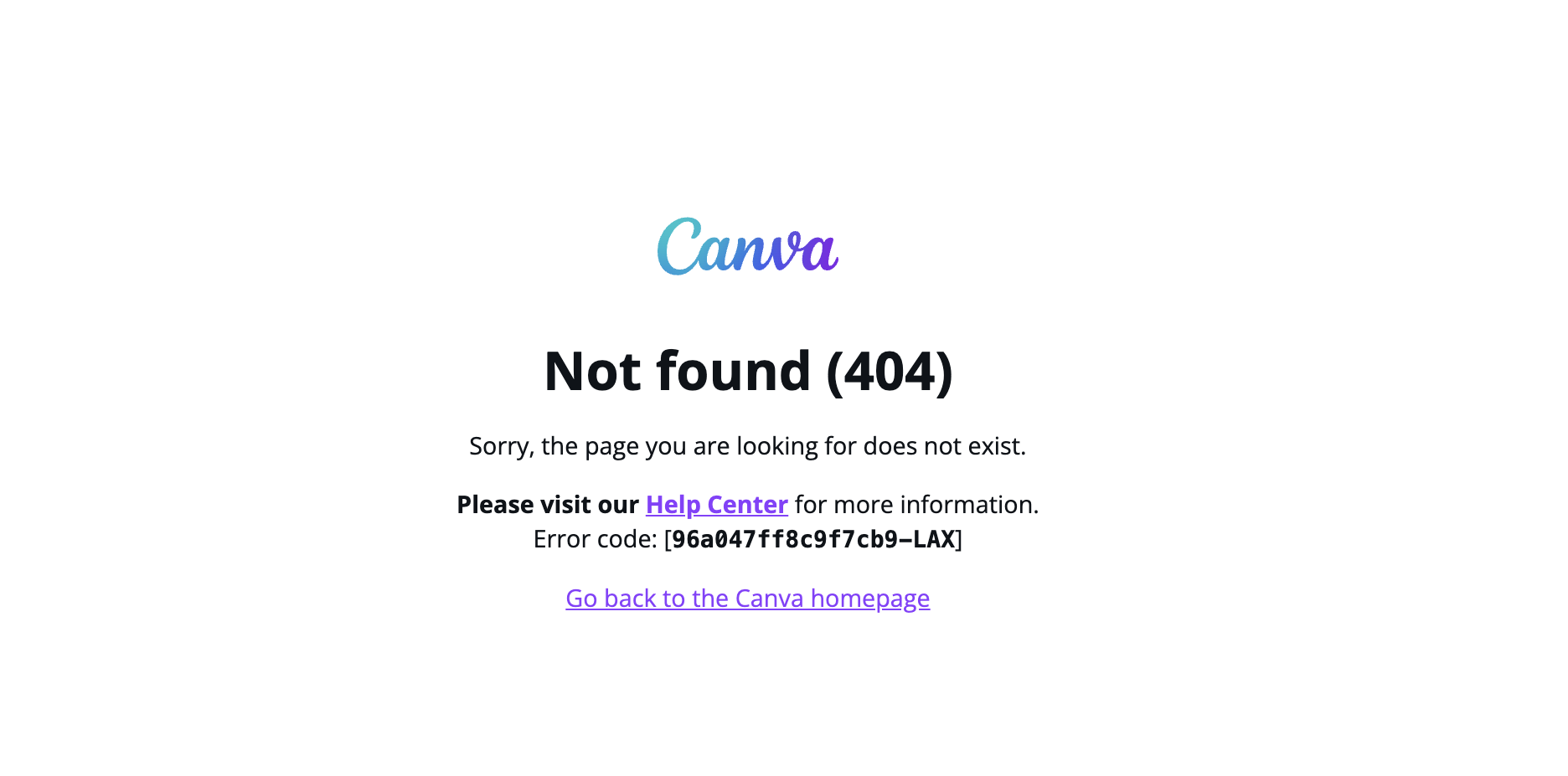
A graphics company with a 404 page that looks like a default template from 2002. No creativity, no visual flair, no attempt to turn a mistake into a moment. The irony is almost painful.
Should you just redirect broken or missing pages to your homepage?
Some brands take this shortcut, Athletic Greens, West Elm, and Everlane among them, so that users never see a 404 at all.
Before you do that, consider this:
Pros
Cons
My opinion? A redirect might save the click, but a thoughtful 404 page can save the relationship.
The Bottom Line
A 404 page might be the last thing you think about when designing a website, but as we’ve seen, it can be so much more than a dead end. From laugh-out-loud irreverence to mini-games you didn’t know you needed, the best 404s turn an “oops” into an opportunity.
They keep people engaged. They reinforce your brand’s personality. They can even get visitors to stick around longer than they intended.
So, whether you go clever, beautiful, interactive, or a mix of all three, remember: a 404 page is still your page. Treat it with the same intention you give the rest of your site. And whatever you do, don’t let it be a digital shrug.
Because if people are going to get lost, you might as well make the detour worth the trip.
Ready to Turn Oops Into Opportunity?
If your 404 page (or any page on your site) isn’t pulling its weight, it’s costing you clicks, leads, and sales.
I help brands transform dead ends into brand moments that keep visitors engaged and moving toward a purchase.
Here’s how we can work together:
- Request a Consultation – A focused, 60-minute strategy session to fix what’s broken and map quick wins.
- Done-for-You Services – Copy, conversion optimization, and funnel builds that actually make you money.